
Engineering of solubility, absorption and stability.
We assess liposomal, BioSOLVE®, nano-liposomal, Aquasol™ and multilayer beadlet options against the target ingredient and dosage form. Technology selection considers the available bioavailability, solubility and stability data.
Multilayer beadlet technology.
Bring selected actives into one beadlet through separated layers and plant-derived barrier design. Develop the formulation, protective approach and commercialization plan around your brand.
Explore beadlet development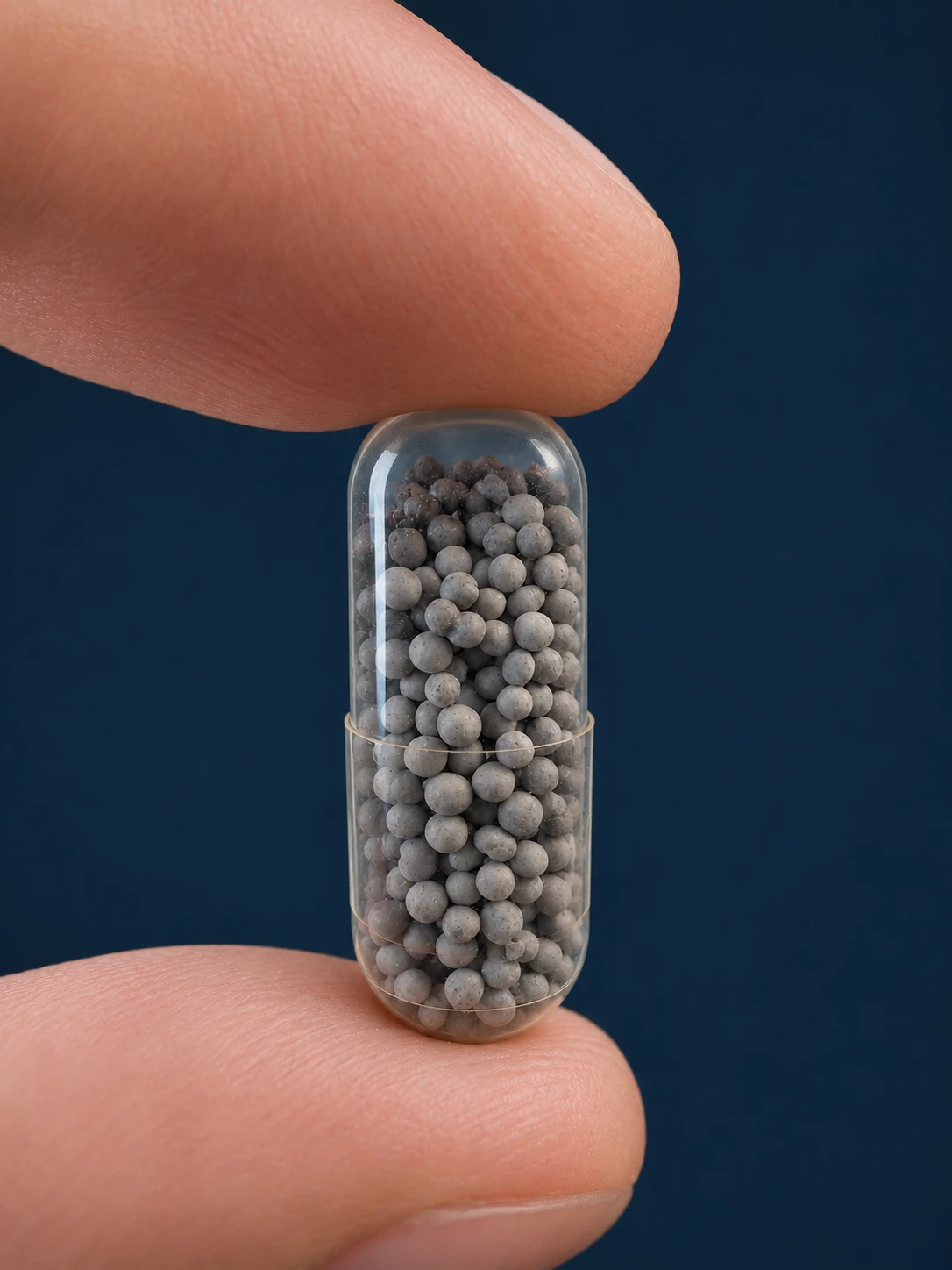
BioSOLVE®
A product-specific approach to solubility and absorption
BioSOLVE Curcumin and Metaberine® have their own formulations and research dossiers. We review each product separately, considering the active ingredient, the formulation and the intended application.
Bioavailability findings are read alongside the tested product, dose, comparator and study design. A result for one ingredient cannot be assumed to apply to another.
- Product identity and current specification
- Ingredient-specific research and comparative data
- Formulation compatibility and stability requirements
Start with the ingredient.
- BioSOLVE Curcumin
- Review the curcumin formulation, specification and research dossier.
- Metaberine®
- Review the berberine formulation and product-specific clinical and pharmacokinetic evidence.
BioSOLVE is not automatically a liposomal platform. The carrier structure must be established for the individual product.
Liposomal ingredients.
Product-specific characterisation and stability data
Liposomal formulations use phospholipid-based vesicles. Depending on their properties and the formulation, ingredients may be associated with the aqueous interior or the lipid bilayer.
Our portfolio includes liposomal vitamin C, coenzyme Q10, resveratrol, berberine, curcumin and saffron options. The exact grade, active content, carrier structure and available research are assessed for the selected ingredient.
- Active identity, content and batch CoA
- Structure, size distribution and encapsulation data
- Stability and compatibility with the intended formulation
Portfolio reference: SSV Phytopharma — liposomal ingredients.
A phospholipid carrier
Nano-liposomal technology.
Size, structure and intended use are assessed together
The term nano-liposomal describes a carrier approach; it does not establish a single particle size or a common performance profile for every product. Size distribution and structure are assessed using the methods and conditions reported for the selected material.
We offer saffron in a nano-liposomal liquid form. For a development project, we review its current specification, composition and compatibility with the proposed dosage form.
- Product-specific size distribution and measurement conditions
- Morphology, composition and active content
- Stability and evidence relevant to the intended application
Portfolio reference: SSV Phytopharma.
Characterise before selecting.
- Size
- DLS characterises hydrodynamic size and distribution under the stated measurement conditions.
- Structure
- Microscopy provides information about morphology; it complements the analytical dossier.
- Application
- Absorption, permeability and safety require evidence relevant to the ingredient and intended use.
Particle size alone does not establish skin penetration or systemic delivery.
Aquasol™ technology.
Ingredient-specific options for water-soluble formulations
Aquasol brings together ingredient-specific forms developed for water-soluble applications. We review the chosen grade and its dissolution data against the target concentration and formulation conditions.
Solubility, active content and purity are different measures. Coenzyme Q10 and creatine grades must be evaluated against their own specifications; figures for one grade cannot be transferred to another. A water-soluble form is not automatically liposomal.
- Current specification for the exact ingredient grade
- Dissolution method and measurement conditions
- Assay, purity and formulation compatibility
Technology reference: SSV Phytopharma — Aquasol.
Three measures. Three meanings.
- Active content
- How much of the specified active is present in the ingredient.
- Purity
- The identity and impurity limits defined by the relevant specification and analytical method.
- Solubility
- The amount that dissolves in a defined medium under stated conditions.
The selected grade and its batch CoA provide the basis for a technical assessment.
The right technology starts with the right data.
We review each ingredient against its intended formulation. The technical dossier connects the technology to a practical development plan.
On small screens, scroll horizontally to read all columns.
| Assessment area | Data to review | Why it matters |
|---|---|---|
| Active identity and content | Validated assay method, specification and batch CoA. | Confirm which ingredient and active amount will enter the formulation. |
| Carrier structure | Product-specific morphology, size distribution and encapsulation data. | Distinguish a liposomal structure from a solubility claim. |
| Solubility | Measurement method, medium, concentration, pH and temperature. | Assess relevance to the intended dosage form and process. |
| Bioavailability | The tested product, dose, comparator, participants and endpoints. | Interpret findings within the conditions of the original study. |
| Formulation and stability | Compatibility, processing, packaging and storage data. | Plan prototype work and product-specific verification. |
Analytical methods answer different questions: HPLC measures active identity and content; TEM informs morphology; DLS measures hydrodynamic size. These methods do not, on their own, establish human bioavailability.
Method references: NCI — characterisation methods · NIST — DLS measurement protocol
Solubility and stability. Distinct development goals.
Choose microencapsulated CreaStab for pasteurised drinks and gummy production. For water solubility, explore CreAssure with Aquasol™ technology. For a cost-sensitive formula, consider pure 200 mesh creatine monohydrate.
Explore creatine ingredients