

Branded berberine · BioSOLVE® technology

Metaberine®

Formulation informed by scientific evidence.

We produce Metaberine®, our water-soluble berberine ingredient, using BioSOLVE® technology. We share the product specification and findings from human studies to help you assess it for your formulation.

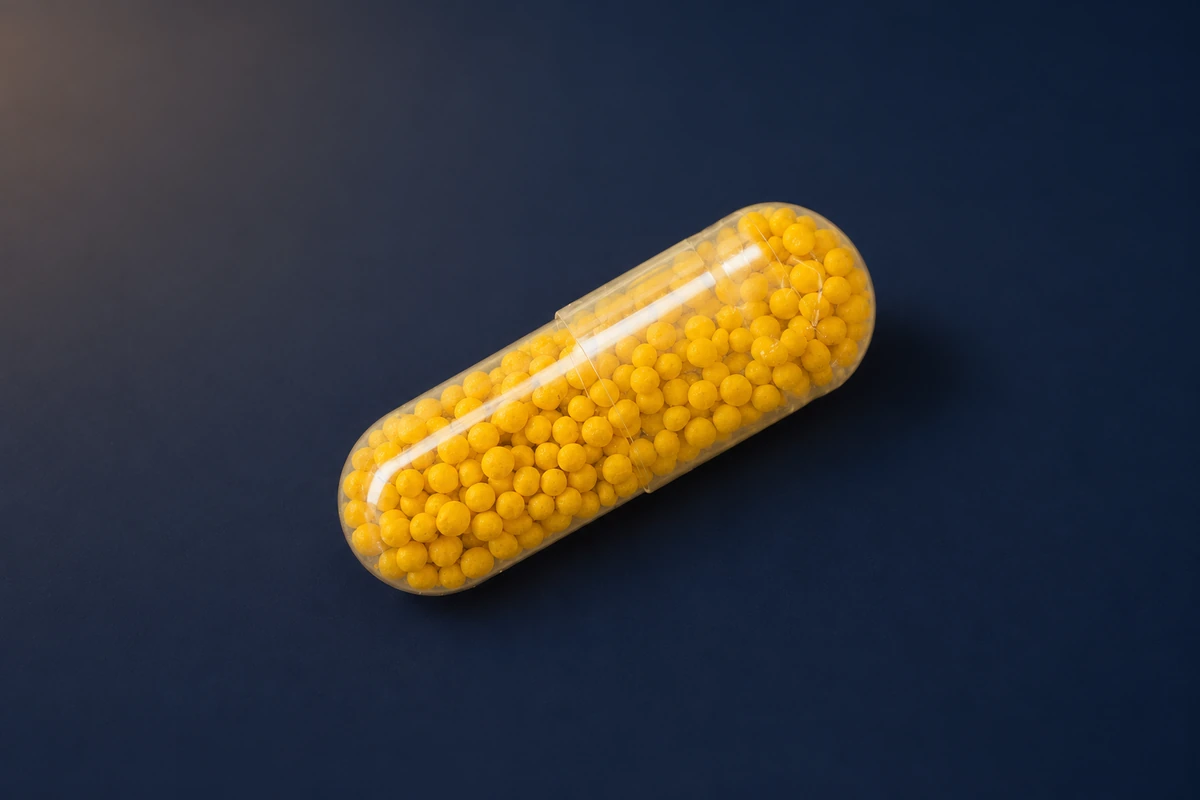
A clear capsule filled with naturally yellow Metaberine® beadlets on a navy background.
Know the ingredient

A formulation-led approach to berberine.

We use BioSOLVE® technology to produce Metaberine®, our water-soluble berberine ingredient. We assess its physical form, active content and research data together as part of product development.

We guide ingredient selection using our ingredient specification, the batch certificate of analysis and your intended dosage form. Amounts investigated in research are not presented as direct recommendations for a finished product.

Discuss your formulation with our team

Our Metaberine® beadlets are naturally yellow. We use no added colourants in these beadlets.

Another berberine ingredient in our portfolio: liposomal berberine HCl

From research to formulation

Every finding in the context of its study.

Clinical outcomes, pharmacokinetic data and preclinical research are presented separately, so you can assess what each finding means for your product.

01
Published clinical trial

Human research on metabolic markers

A randomized, double-blind, placebo-controlled crossover trial in adults with baseline fasting glucose of 100–125 mg/dL and two-hour OGTT glucose of 140–199 mg/dL.

36participants
200 mgdaily formulation amount
14 + 14days across two periods
7day washout
Published human trial · n=36

Model-adjusted fasting glucose difference versus placebo

−1.75 mg/dL

Metaberine® − placebo · linear mixed model

95% CI: −3.0 to −0.5 mg/dL · p=0.0068. The line shows the confidence interval; the point shows the estimated treatment effect.

The publication’s linear mixed-model analysis reports an adjusted fasting-glucose treatment effect of −1.75 mg/dL versus placebo. The period effect was also significant, making the crossover design important to interpretation.

Zeus Hygia funded this single-centre trial. Each treatment period lasted 14 days. Findings are limited to the studied population and short duration; they do not establish long-term efficacy, safety or disease treatment.

Read the published paper


02
Completed human PK study · clinical report

Investigating absorption and plasma exposure.

Metaberine® 30% was investigated in 12 healthy adults in a randomized, double-blind, single-dose crossover study. Both formulations were administered under fasting conditions, with blood sampling through 48 hours.

Test formulation

Metaberine®

200 mg

Formulation containing 30% berberine

≈60 mg nominal berberine
Reference formulation

Standard berberine extract

500 mg

Extract containing 97% berberine

≈485 mg nominal berberine
n=12Participants completing the study
48 hoursSampling after each dose
7 ± 1 daysWashout between periods

Amounts distinguish formulation weight from nominal berberine calculated from the stated contents; active doses are not equivalent. This study investigates absorption and plasma exposure, not glucose control, weight loss or long-term efficacy. These results come from our clinical report summary. The summary has not been published in a peer-reviewed journal.

Preclinical research · published rat PK study

The study published in Cureus compared formulations at 200 mg/kg in eight rats per group. The ratios below are calculated from the reported arithmetic means.

2.6×AUC0–8 · early plasma exposure
11.3×Cmax · peak plasma concentration

Active amounts were not matched. The difference in total AUC was not statistically significant. These animal data do not establish the same ratios or clinical superiority in humans.

Read the preclinical publication
Research programme · November 2026

Evidence today.
Research directions for tomorrow.

Our Metaberine® research programme comprises eight studies. Completed research is shown separately from ongoing and planned work.

04

Completed

  • 36-participant clinical trialPublished
  • 12-participant human PK studyClinical-report summary provided
  • Animal PK studyPublished
  • Acute toxicologyResearch programme update
01

Ongoing

  • 100-participant clinical trialTarget completion: December 2026
03

Planned

  • PCOS/PCOD human clinical studySecond half of 2027
  • 90-day subchronic toxicologyFirst half of 2027
  • AMES testFirst half of 2027

The dates and study stages reflect our November 2026 research update. Target dates may change; ongoing and planned studies are not evidence of completed outcomes.

Technical dossier and formulation support

Technical support for your formulation.

We evaluate your planned Metaberine® product in the context of the ingredient’s properties, the other formulation components and the intended dosage form. Contact our team for samples and technical documentation.

  • Current product specification
  • Lot-specific certificate of analysis (CoA)
  • Analytical methods and technical data sheet
  • Available stability and research documents
Frequently asked questions

Technical detail. Clear answers.

What is Metaberine®?

We use BioSOLVE® technology to produce Metaberine®, our water-soluble berberine ingredient. Our current specification and batch certificate of analysis document its properties.

Does 200 mg of Metaberine® mean 200 mg of berberine?

No. The 200 mg Metaberine® 30% formulation used in the new human PK study corresponds to approximately 60 mg of nominal berberine, calculated from its stated content. Formulation weight and active content must be considered separately.

What do the human PK and clinical studies investigate?

The 12-volunteer PK study examines absorption and plasma exposure after a single dose. The published 36-participant clinical trial evaluates metabolic markers during 14-day treatment periods. Their objectives and outcome measures are different.

Have all eight studies in the research programme been completed?

No. Our November 2026 research update lists four completed studies, one ongoing study and three planned for 2027. Completion is not the same as publication in a peer-reviewed journal.

How can I request samples and technical documents?

Use the contact form to request Metaberine® samples, specifications, a CoA or research documents. Our technical team will review the available documents alongside your formulation requirements.

Sources

  1. Jeyakodi S et al. International Journal of Clinical Trials. 2026;13(3):270–282.DOI: 10.18203/2349-3259.ijct20262501 · 36-participant metabolic trial
  2. Cureus. 2026. DOI: 10.7759/cureus.109791.Comparative pharmacokinetic research in rats
  3. Metaberine® human PK clinical report summary (LCBS-BA-195, Zeus Hygia, August 2026) and research programme update (November 2026).These technical documents have not been published in a peer-reviewed journal.
First Step

Is this active right for your product? Let's assess it together.

Send your request for samples, lot-based CoA and the clinical data file; our technical team replies within 24 hours.